Biography
My story
Born a Kikuyu on the slopes of Mt. Kenya amid grinding poverty, I was introduced to the concept of knowledge in books and the importance of education early in my childhood when my father bought me my first book. It was a lesson that propelled me towards continuous learning in the river of knowledge. RUNNING WITH LIONS: A MEMOIR tells my story of perseverance in the face of great odds and danger as I made my improbable way across continents and cultures to become a physician in the western world. The journey illuminates the human qualities that unite and divide us all, regardless of location, race, education, or wealth.
I learned my “ABCs” under a mango tree; the sandy ground was my notebook. I also found that my black skin was conducive to my scratching notes with a sharp stick on my thighs. Those were days of hunger when I had but one meal a day. I often supplemented this with mangoes that fell from the many mango trees in Mombasa. I walked 5 miles barefoot each way to school, often in the scalding hot days of the tropics. My education in Mombasa fulfilled the elementary school examination, and I was one of the few students to pass. Although there were no advanced schools for Black children in Mombasa, I was fortunate to win a slot to St. George’s, a new Catholic High School near Mombasa. But after just one school year, I was forced to drop out for lack of school fees.
Childhood was complicated by the Mau Mau Rebellion when my tribe, the Kikuyu, rebelled against British colonialists in an effort to reclaim our lands. My father brought me to a secret Kikuyu gathering in which I took the Mau Mau oath to fight alongside my fellow Kikuyu. Though I took the oath, I had my sights set on attaining further education.
Upon hearing news that the Russian Embassy in Khartoum, Sudan was offering scholarships to Russian Universities, I walked from Nairobi to Sudan. It was a harrowing walk at night through dark forests full of wild animals and Black Sudanese Christians warring against Northern Arabs. Within days of crossing the border into Sudan, I was captured in Juba by Arabs. Though the Arabs lined up and shot dead many others captured at the same time, for reasons unknown, they spared me and drove me back to Kenya.
For a second time, St. George’s school accepted me back, and in a-year-and-half, I managed to be the top scholar, which allowed me to go to Strathmore College in Nairobi for Pre-Med studies. Strathmore was the first multi-racial institution in Africa. I joined their rugby team, which was highly successful. After winning the East African Rugby Tournament, I was in an auto accident on the drive home. Two professors died, and I suffered extensive burns. I became the first Black patient in a previously Whites-only hospital for four months. The doctor refused me adequate care and withheld pain medication. Thankfully, a good friend from the university arranged plastic surgery elsewhere to repair hand tendon contractures. It restored my hand’s function and kept my hopes to practice medicine alive.
I accepted a scholarship to Pamplona in Spain to study medicine, learned Spanish, and was introduced to a European and Western way of looking at life. But the murderous treatment of my people by the British during the Mau Mau Rebellion was always at the forefront of my mind. It was a subject I investigated during my many visits to England where a generous English family acted as my hosts. Their ideas about colonialism and the Mau Mau Rebellion diverged enormously from mine. But they were nonetheless loving and kind towards me. In London, I sought to understand Western classical music and museum art, which enhanced my love of books and literature.
During my last year of medical school, I spent half a year in a Kenya Hospital. Black healthcare providers battled disease and poverty amidst mismanagement by the new Black government that was no better than the British. Pediatric death from tetanus, malnutrition, tuberculosis, and other maladies was the order of the day. I also managed injuries resulting from British atrocities on war veterans, and I performed autopsies in a fly-infested morgue. But in all of this darkness, a Danish nurse, Anne, was my one shining star. She brought me joy in a world of great sadness.
All I have been able to do in my life has been made possible by my persistent movement forward and my interactions with other people, many of whom showed great compassion and support for my dream of becoming a doctor. Whenever I turned a difficult corner, someone appeared to lend me a hand – not because I am particularly lucky, but I believe because I have always been a prism that reflected the kindness and generosity of others. The dark night I experienced as a child was resolved by Providence’s light.
Timeline
1940s
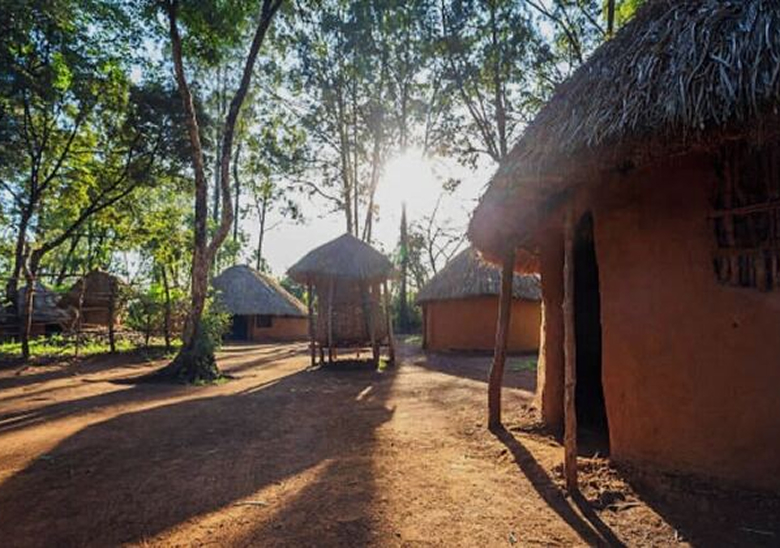
Kikuyu Village of my early childhood
The Kikuyu shared the land with many animals: leopards, hyenas, and foxes that didn’t always respect man as their superiors.
1950s
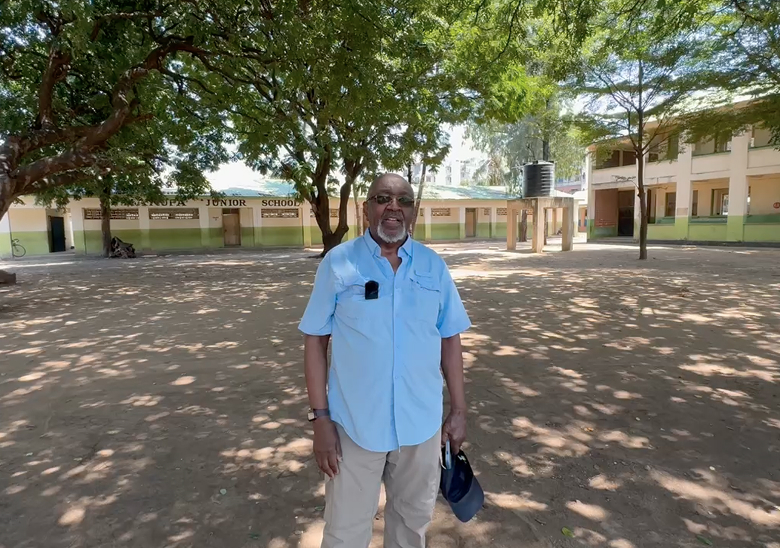
Makupa Elementary School in Mombasa, Kenya
Many years learning arithmetic and to read and write on this very ground.
1950s
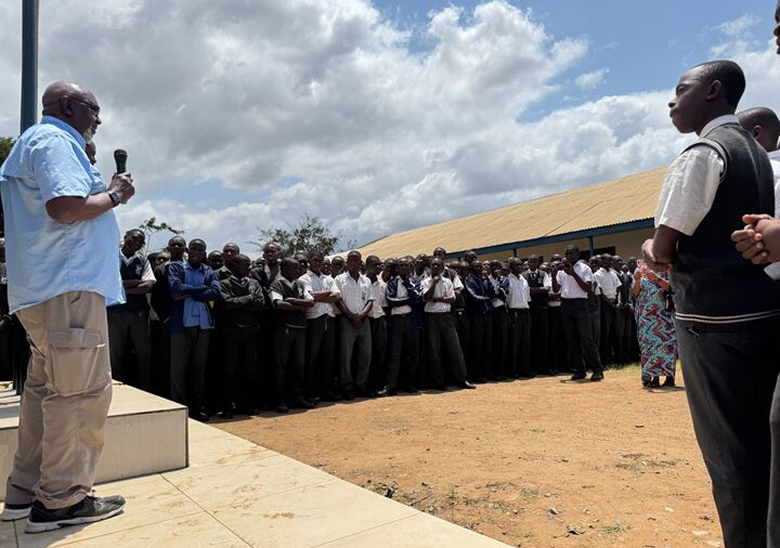
St. George’s High School, Kaloleni, Mombasa
I was very lucky and honored to be among the very first group of Kenyans afforded the opportunity to pursue high school education provided by missionaries.
1960s
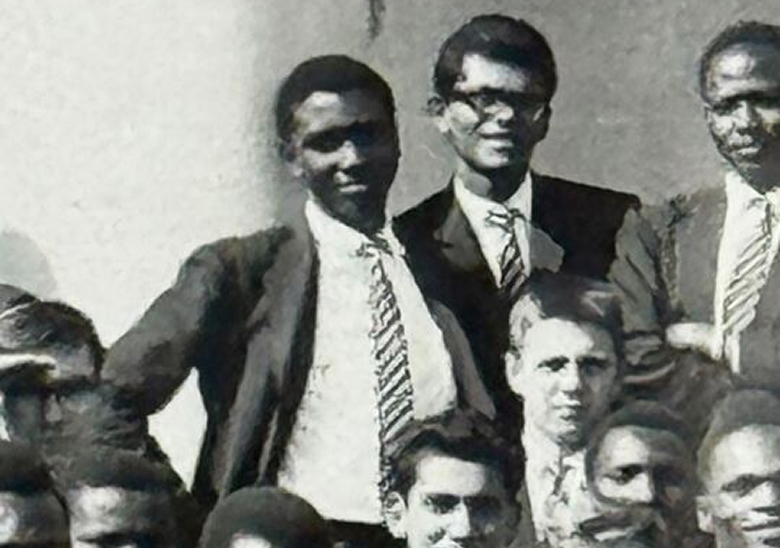
Strathmore College, the first racially integrated school in all of Africa
You can see the immense pride and happiness I had to be included in the first multiracial student body at Strathmore; guaranteeing a meaningful future.