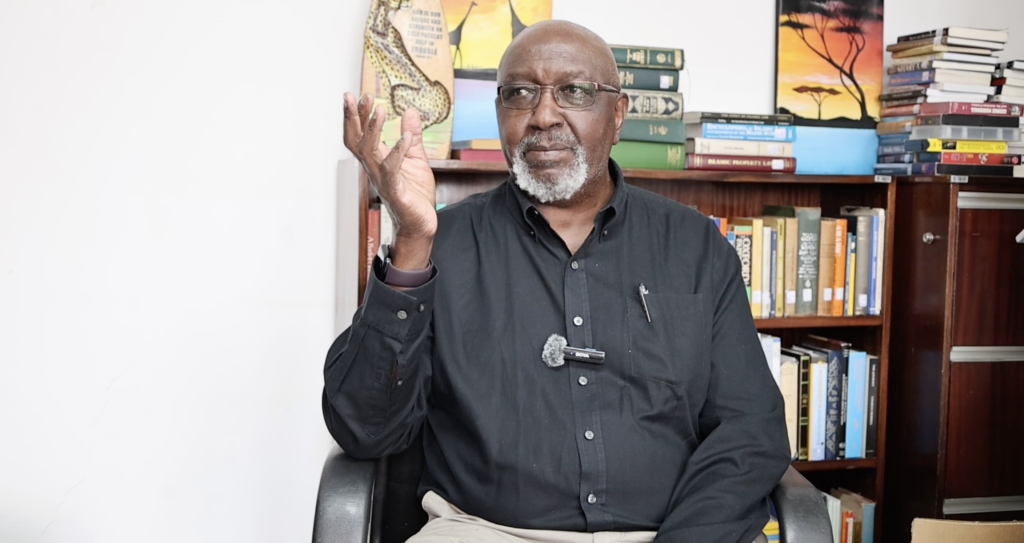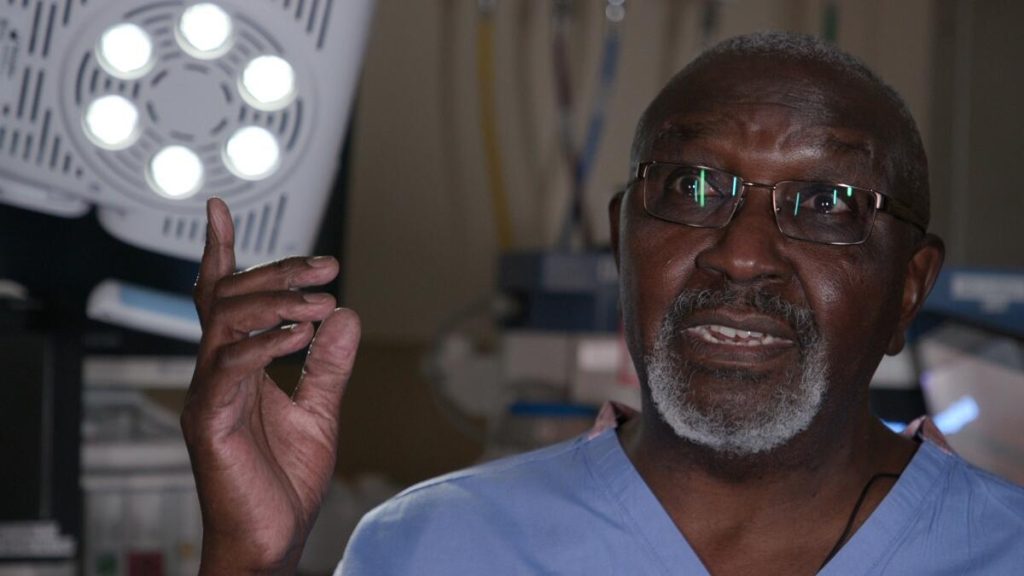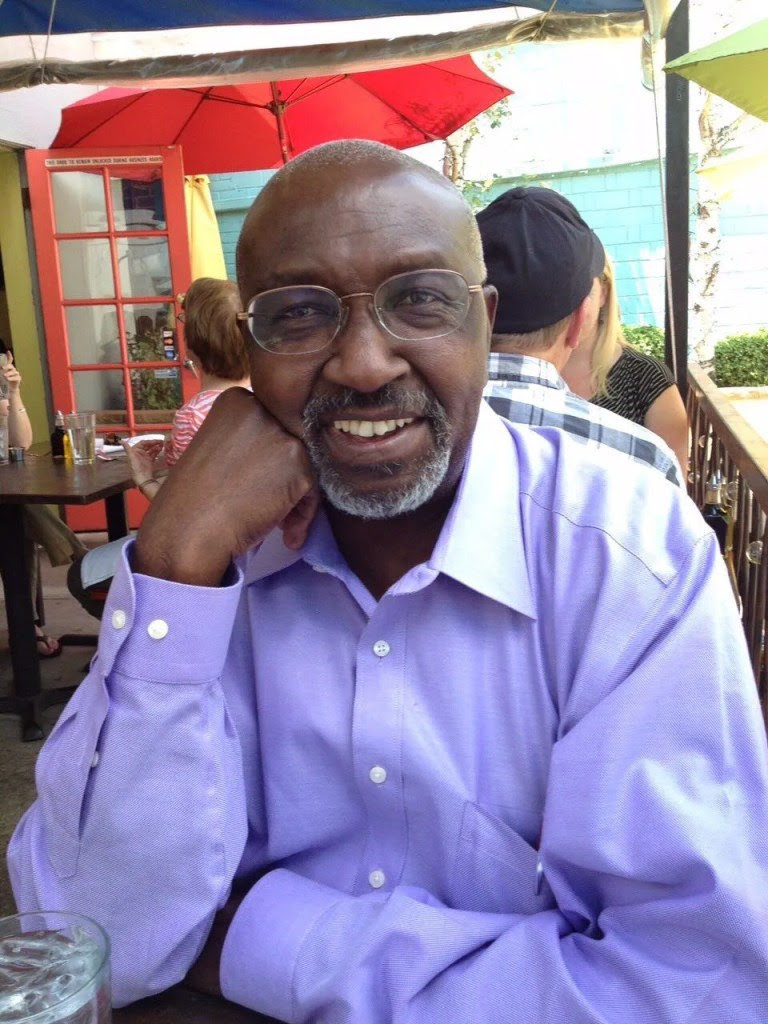
As we approach Thanksgiving, a holiday that encourages us to reflect on our community and the people who shape our lives, we’re revisiting a meaningful conversation we previously published at Bucket List Community Cafe. This week’s 5 Questions features Dr. Pius Kamau, a surgeon, writer, immigrant and longtime Denver voice whose story continues to resonate powerfully three years after we first published it in October 2022.
Born in Kenya and trained in Spain, Dr. Kamau built his surgical career in Denver over three decades, becoming one of just a handful of Black surgeons practicing in the city at the time. Along the way, he became equally known for his advocacy and his writing for The Rocky Mountain News, The Denver Post, NPR, HuffPost and national magazines. His commentaries have examined everything from inequities in health care to the lived experience of immigration, always with a clear voice and unflinching honesty.
When we first spoke with Dr. Kamau, he described the challenges he faced arriving in Denver as an immigrant doctor, the barriers that continue to limit representation in medicine and the societal changes needed to help more BIPOC students enter the field. His reflections remain strikingly relevant today, especially as Colorado continues grappling with health disparities exposed during the pandemic.
Rereading his insights in 2025 reminds us of how personal and systemic journeys intersect and why stories like his are important. As you gather with loved ones this week, we invite you to spend time with Dr. Kamau’s perspective: a testament to resilience, mentorship and the ongoing work required to build a more equitable future in Colorado.
What was it like coming to Denver as an immigrant doctor?
Coming to Colorado from New York, I was impressed by everyone’s friendly behavior and attitude to me and my family. This was important for an immigrant like me, for in the end, places are just that—places. It is the people in those places that make a difference—friendly and welcoming or unfriendly and unwelcoming. I spent a year at The Children’s Hospital, training in Thoracic surgery, aiming to return to Kenya to offer my surgical services to my countrymen. When it became clear that that was not possible, I was forced to do the next best thing to support my family—I went into private practice in Denver. I was qualified; I was young and energetic.
Denver gave me a place to settle down and raise a family. I was one of four Black surgeons, and we helped each other, joining the unsung struggles of professional minorities that are common across White America. It is a struggle more intense in the medical profession that has, for several centuries, been a “whites-only” preserve. But I was warned that it was going to be hard building a practice. “They’ll try and kill you,” a gentleman who was urging me to pack my bags and go elsewhere said. It is true, the competition was fierce; the turf war was brutal and intense. But I was determined to make it work. You couldn’t come from where I grew up in Africa, with the poverty that was our birthright, and wilt like a rose just because of a little competition.
I have been friends with a number of African Americans, but must admit I am too much of an African. Some habits and behaviors from our birthplace never really change. Such is the burden of the traveler and the immigrant. As a Black physician colleague once told me: “You’re just not sophisticated, Pius. You’re too much like an African.” There is an aggressiveness and razor-edge sharpness to the American character that the African mind can’t quite countenance or develop. I think it’s an attitude and psychological posture American Blacks have had to adopt to survive in this White man’s land. The characteristics and personal qualities that served me well living among lions and elephants in Kenya need supplementing to deal with the American street.
All in all, in addition to the foregoing, it has been an excellent adventure; I still wear the skin I wore when I left the tropics. It’s rather worn and loose—time does that to all of us. But I am very proud of it. I have succeeded in thwarting my competitors’ aim to reject and drive me out of Denver. With my dogged demeanor, I have improvised and survived. I actually have come to enjoy and cherish the fight—remnant of the fighting spirit I developed in the African bush. I feel it has made me into a tougher man. It certainly has stimulated many ideas, which I use in my writing—my second and last career.
Are we seeing more representation in the ranks of physicians here in Colorado?
Sadly, not. It has taken many years for the “medical establishment” to understand that training and accommodating more minority physicians into the rolls of the profession is as important as treating “colored” people fairly. In the three and a half decades I have been in Denver and Colorado, the thought and idea of diversity in the medical field has remained just that—an idea.
Blacks and Hispanics make up 31% of the US population and less than 13% of physicians of color in the US. This is inadequate and needs correcting. The recent COVID pandemic clearly showed the deleterious significance of such a deficit. In some locales, up to 60% of those dying were minorities, much of it an indication of the lack of pre-pandemic medical care resulting from the lack of healthcare for minority patients who suffered from diabetes, hypertension, obesity, COPD, etc. They all were factors contributing to the high mortality. The COVID pandemic was sadly more of a minority killer than any other group. Tiny steps are being taken to increase medical school enrollment of Black and Hispanic students. They are tiny and also inadequate.
What do you think we need so that we have more BIPOC doctors?
The quality of K-12 minority education must improve if high school graduates are to succeed in STEM education at the college level. For too long, the Black high school-to-prison pipeline has become a durable, strong structure to break. The failure at the K-12 level is multifactorial and includes poor schools, disruptive, chaotic, violent neighborhoods, poor discipline and schoolteachers who are not particularly strong in math and science pedagogy. A majority of the American population says, “They are bad in math,” referring to Black and Hispanic students whose parents are themselves math illiterate or may have infected their children with the disease of “I hate math” or “I am no good at math.” The weight of 400 years of history of “you just can’t do it” all weigh heavily on many Black children.
The solution is a societal transformation: parents who transmit an attitude of “you can do it.” The public at large should be re-educated to become a can-do organism. To minority kids, colleges and universities have for decades appeared like inaccessible castles surrounded by tall gates. These institutions should come to the street and village level so that poor students see they too can become engineers, doctors and mathematicians. Just because someone is poor doesn’t make them dumb and talentless. It is the talented poor that we should seek to promote, support and encourage to be the best they can be. God knows they are out there in large numbers—on the street, in jails, in failing schools; potential doctors, engineers and mathematicians. Their rescue and salvation is our nation’s obligation.
In short, we need to get young kids and older students enthused in the wonder of science and the truly simple language of mathematics. We should start at the kindergarten level, teaching this language that’s no different from others and which, once mastered, becomes a truly pleasurable experience. To savor and appreciate the nuance of its vocabulary, syntax and sentence structure is the key to opening the educational door that all of us have passed through on our way to many professions and careers. And one of the professions is medicine.
What are you trying to do to make that happen?
Cognizant of the paucity of minority physicians, I have become an advocate of medical and STEM education. At first, I believed getting universities and colleges (Institutions of Higher Education—HEIs) involved with students at the high school level was ideal. Colleges know how to teach to entrance exams (SATs and ACTs) and therefore can teach our students what it takes to go to college. The infrastructure is there; all we need to do is bring schools, students and colleges together. Or so I thought. I was disappointed as I approached many in HEIs. In fact, some asked me: Why are you doing this? What qualifies you to do this?
I now have a group of highly motivated individuals going into the community and working at the community level. With an eye to strengthening the STEM education of students, in consort with the Boys and Girls Clubs, a number of engineering groups, and other businesses that B&G Clubs deal with, we are planning to teach students how to take the SATs and ACTs as part of such an intervention. Once that is in place in Colorado, we plan to slowly engage other entities across America. Clearly, we must begin small and grow as time and resources permit.
What do you like about living in the Denver area?
A place is its people, and I have made many “friends” in four decades here. With the many universities and colleges, Denver has an academically stimulating atmosphere, which I love. The literary milieu is fabulous. Over the years, I have belonged to various groups, including the Fiction Writers’ group and others. I love the theater scene a lot, as well as other entertainment aspects of the city. Over the years, I have been lucky to write for several newspapers and have been on the radio and TV. One of the most satisfying feelings in our lives is when other people appreciate something of value in us. I am now retired from the practice of medicine; the time I have at hand allows me to write and think. I just finished writing two books—a memoir and a novel and am hard at work on a new novel. They are all possible because Denver’s atmosphere is conducive to creativity.